Why Google CEO Sundar Pichai Needs a 'Boo Strategy' for AI Talks
AI-assisted, human-edited
This article was drafted with the help of large language models and reviewed by a Shine Soft Corp engineer before publication. Facts, citations, and code samples were verified against the linked sources. All opinions and editorial direction belong to the editor.
Google CEO Sundar Pichai acknowledged growing public anxiety around AI and discussed preparing for possible backlash during his Stanford commencement speech.
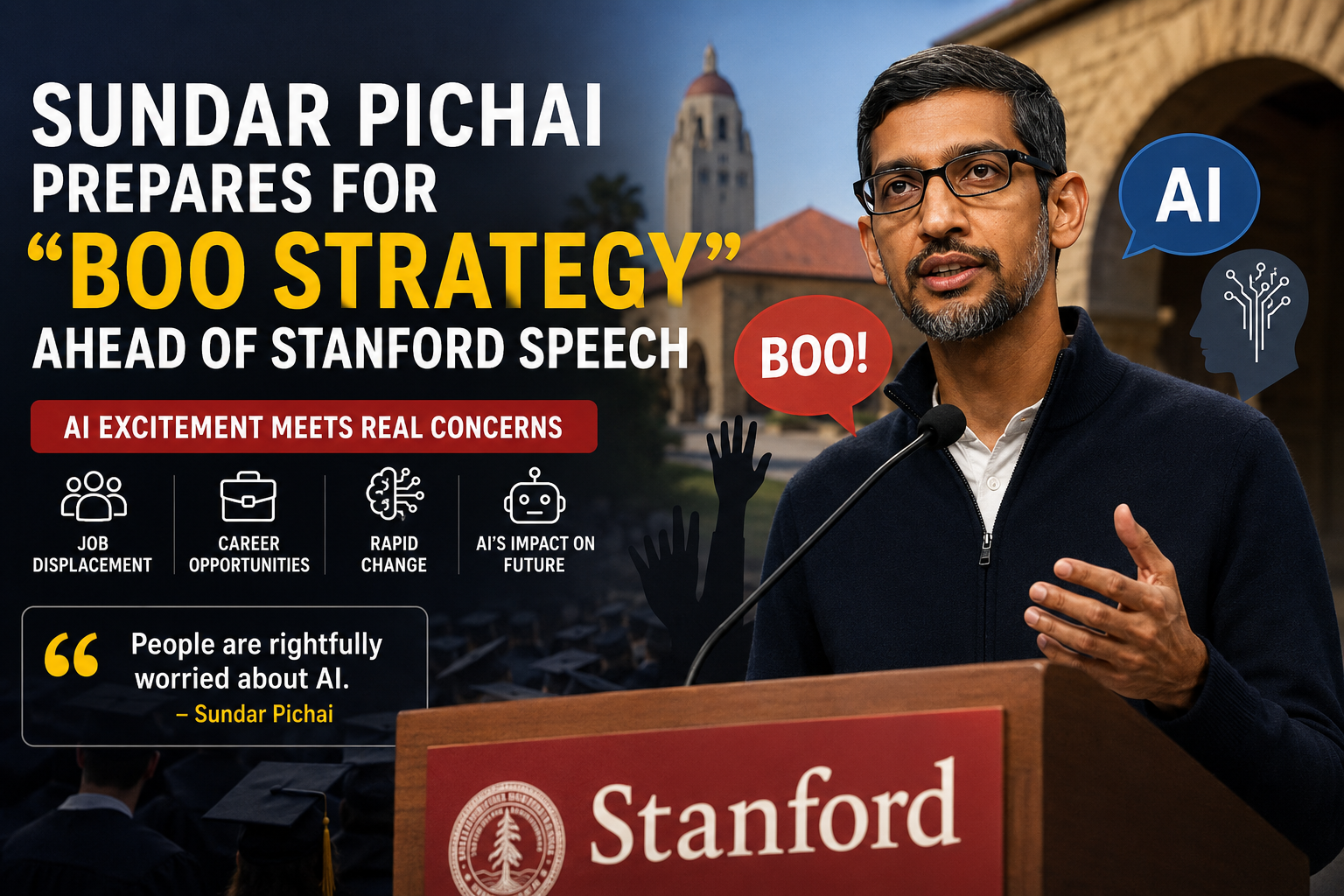
Why Google CEO Sundar Pichai Needs a "Boo Strategy" for AI Talks
Artificial intelligence is transforming industries at a speed few technologies have achieved before. But alongside excitement comes anxiety—especially among students preparing to enter the workforce.
That tension recently surfaced in an unusual way: Google CEO Sundar Pichai revealed he had thought about a possible "boo strategy" ahead of his upcoming Stanford commencement speech.
The phrase may sound humorous, but it reflects something deeper happening in the AI era.
Why Tech Leaders Are Facing Pushback
During a recent appearance on the Hard Fork podcast, Pichai was asked how he would respond if graduates reacted negatively to discussions around AI.
The question wasn't random.
Recent commencement speeches from other executives triggered backlash:
- Former Google CEO Eric Schmidt reportedly faced boos during AI-related remarks.
- Music executive Scott Borchetta also experienced criticism after discussing AI's impact on creative industries.
Students and young professionals increasingly worry that AI may reshape jobs faster than society can adapt.
"People Are Rightfully Worried"
Pichai did not dismiss those concerns.
Instead, he acknowledged something many leaders avoid saying directly:
People are rightfully worried about AI.
His response reflected awareness that AI discussions are no longer purely about innovation or productivity. Increasingly, they involve uncertainty around:
- Job displacement
- Career opportunities
- Rapid technological change
- Long-term societal effects
Pichai suggested humans are not naturally designed to process change at the scale currently occurring with AI advancement.
Graduates Are Entering an Uncertain Job Market
The timing matters.
Many graduates entering the workforce today face:
- Slower hiring processes
- Increased automation
- AI-assisted recruiting systems
- Concerns over entry-level opportunities
As AI becomes integrated into more business operations, people entering their careers often wonder:
"Will AI become a tool that helps us—or one that replaces us?"
That question has become central to public conversations around technology.
Pichai Still Remains Optimistic
Despite acknowledging fears, Pichai remains positive about younger generations.
He suggested that today's graduates will not simply experience AI's impact—they will actively shape it.
According to his perspective:
- Future workers will help define AI systems.
- New generations will determine how AI gets used.
- Technology progress historically creates new opportunities alongside disruption.
Rather than presenting AI as something happening to people, he framed it as something people themselves will guide.
The Bigger Message
Perhaps the most interesting takeaway is not the possibility of graduates booing a tech CEO.
It's that some of the world's most influential AI leaders now feel the need to prepare for it.
Commencement speeches were once largely inspirational moments. Today they increasingly reflect larger public debates around trust, technology, and economic change.
The phrase "boo strategy" may be memorable, but it highlights a growing reality:
AI is no longer only a technology discussion.
It's becoming a human conversation.
Final Thoughts
The AI debate is shifting.
People are no longer asking whether AI will change society.
They're asking how, how fast, and who benefits most from it.
As AI leaders continue speaking publicly, understanding those concerns may become just as important as building the technology itself.
What do you think?
Will AI create more opportunities than it removes—or are current concerns justified?
Share your thoughts below.
Sources: Public reporting and discussions from Hard Fork podcast coverage and multiple media reports.