Scaling Laws Explained: The Secret Formula Behind GPT-3, GPT-4, o1 & o3
AI-assisted, human-edited
This article was drafted with the help of large language models and reviewed by a Shine Soft Corp engineer before publication. Facts, citations, and code samples were verified against the linked sources. All opinions and editorial direction belong to the editor.
Discover how scaling laws predict AI performance, driving breakthroughs like GPT-3 and o3. Learn why bigger models aren't always better and how test-time compute is changing the ga
Scaling Laws Explained: The Secret Formula Behind GPT-3, GPT-4, o1 & o3Discover how scaling laws predict AI performance, driving breakthroughs like GPT-3 and o3. Learn why bigger models aren't always better and how test-time compute is changing the ga
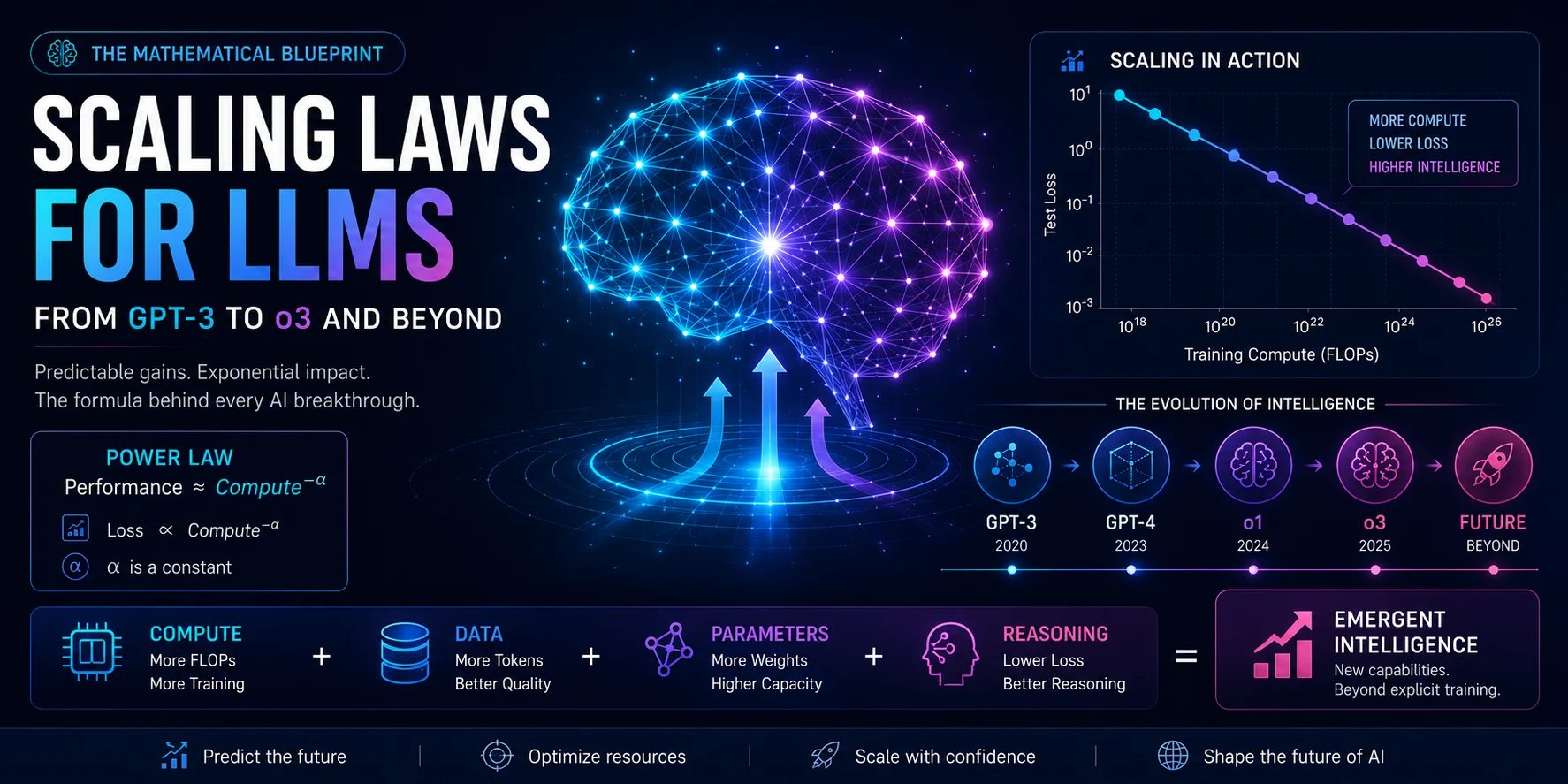
Introduction
Imagine telling someone in 2019 that simply making an AI model larger would eventually allow it to solve Olympiad-level mathematics, write production-ready software, reason like a researcher, and even outperform PhD students on many benchmarks.
Most experts wouldn't have believed you.
Yet that's exactly what happened.
Behind nearly every major breakthrough—from GPT-3 to OpenAI's latest reasoning models like o3—is a surprisingly simple mathematical principle called a Scaling Law.
Scaling laws have become the roadmap that guides billions of dollars in AI investment. Rather than relying on guesswork, researchers can now predict how much smarter a model will become simply by increasing compute, data, or parameters.
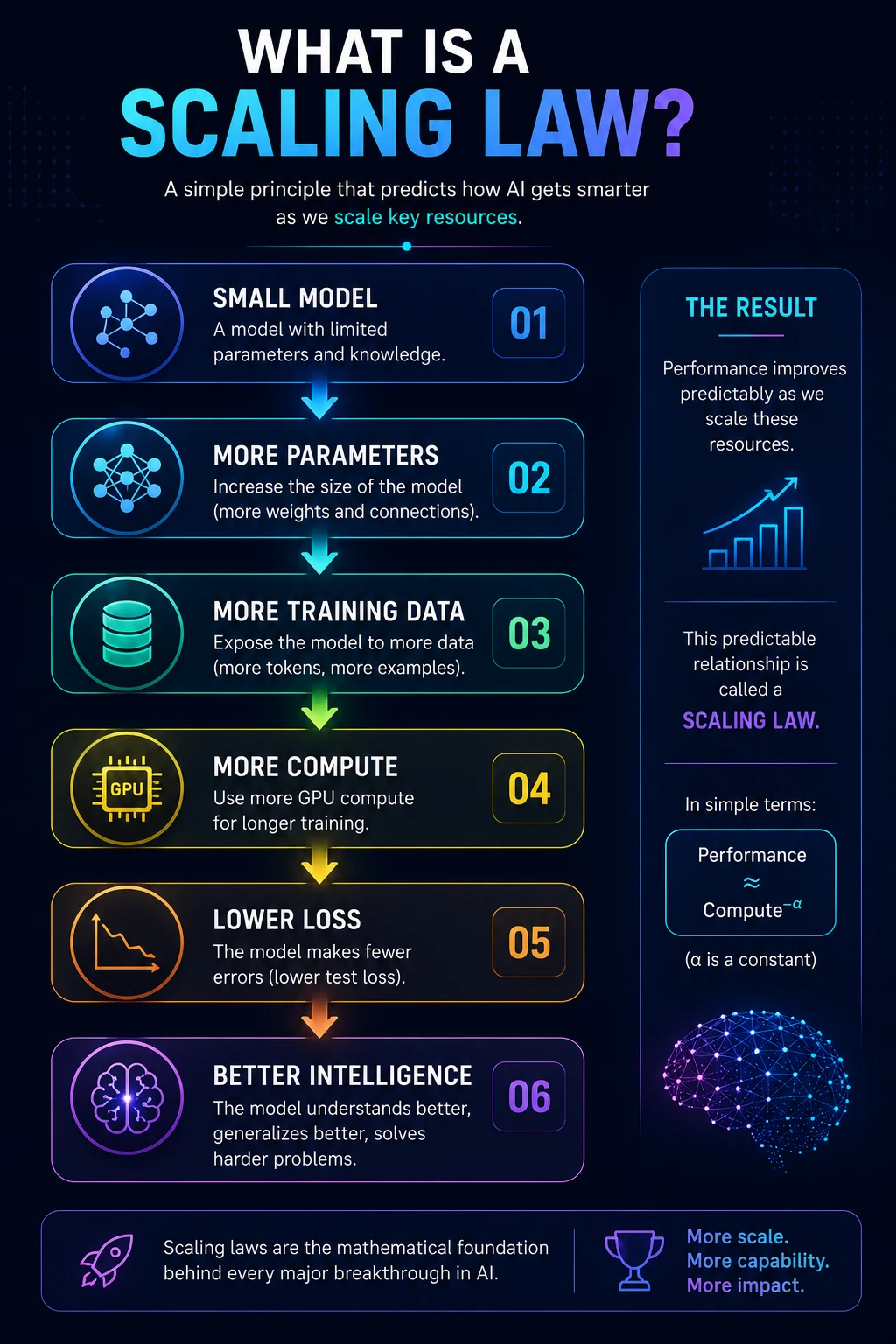
What is a Scaling Law?
Explain:
A scaling law is simply a mathematical relationship between resources and intelligence.
When you increase:
- Training Compute
- Dataset Size
- Model Parameters
the prediction error decreases in a highly predictable way.
Formula:
Performance ≈ Compute^-α
where α is a constant.
Why This Changed AI Forever
Before 2020
Researchers:
"Let's invent smarter architectures."
After GPT-3
Researchers:
"Let's scale everything."
This single shift transformed the AI industry.
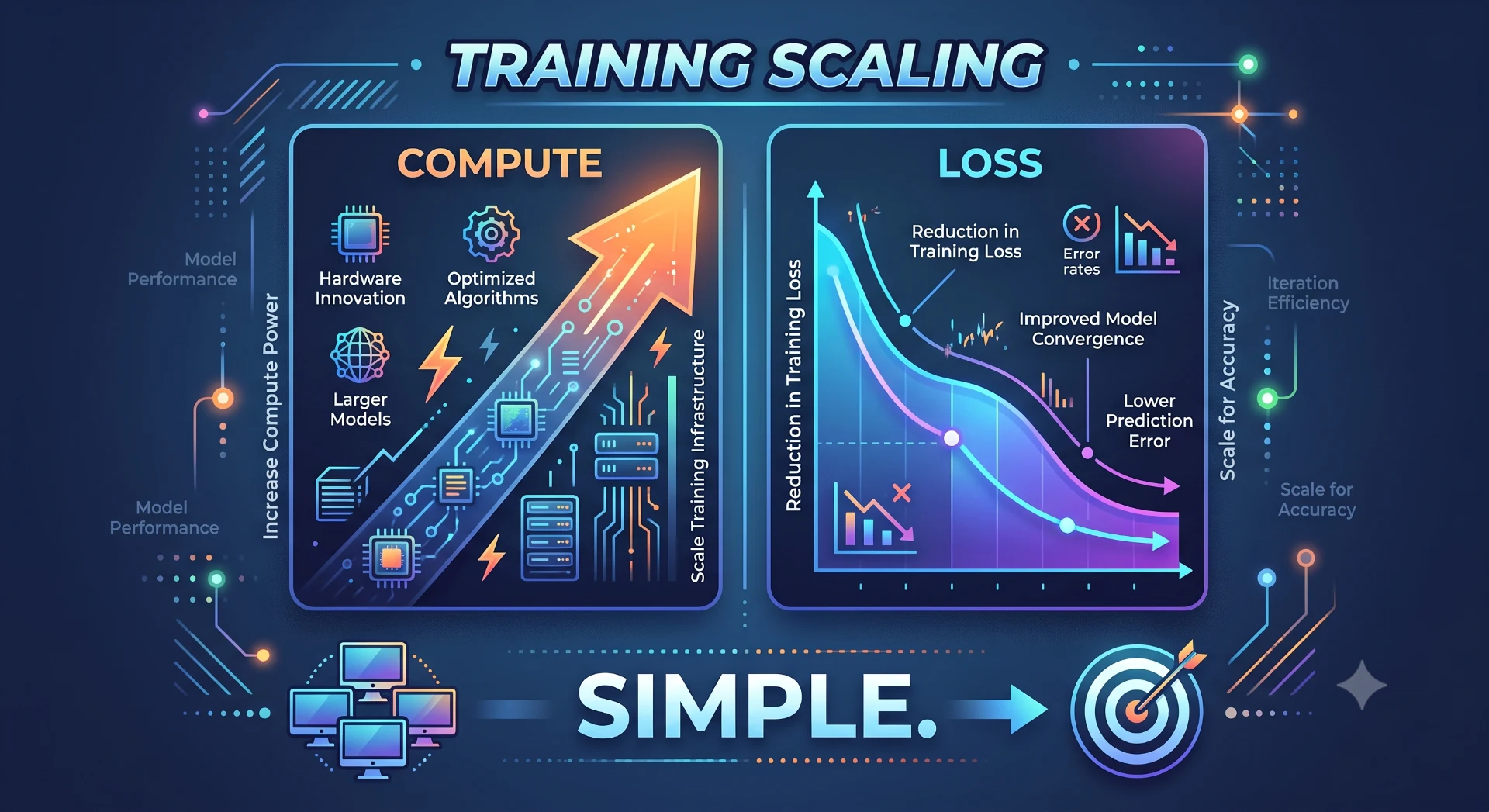
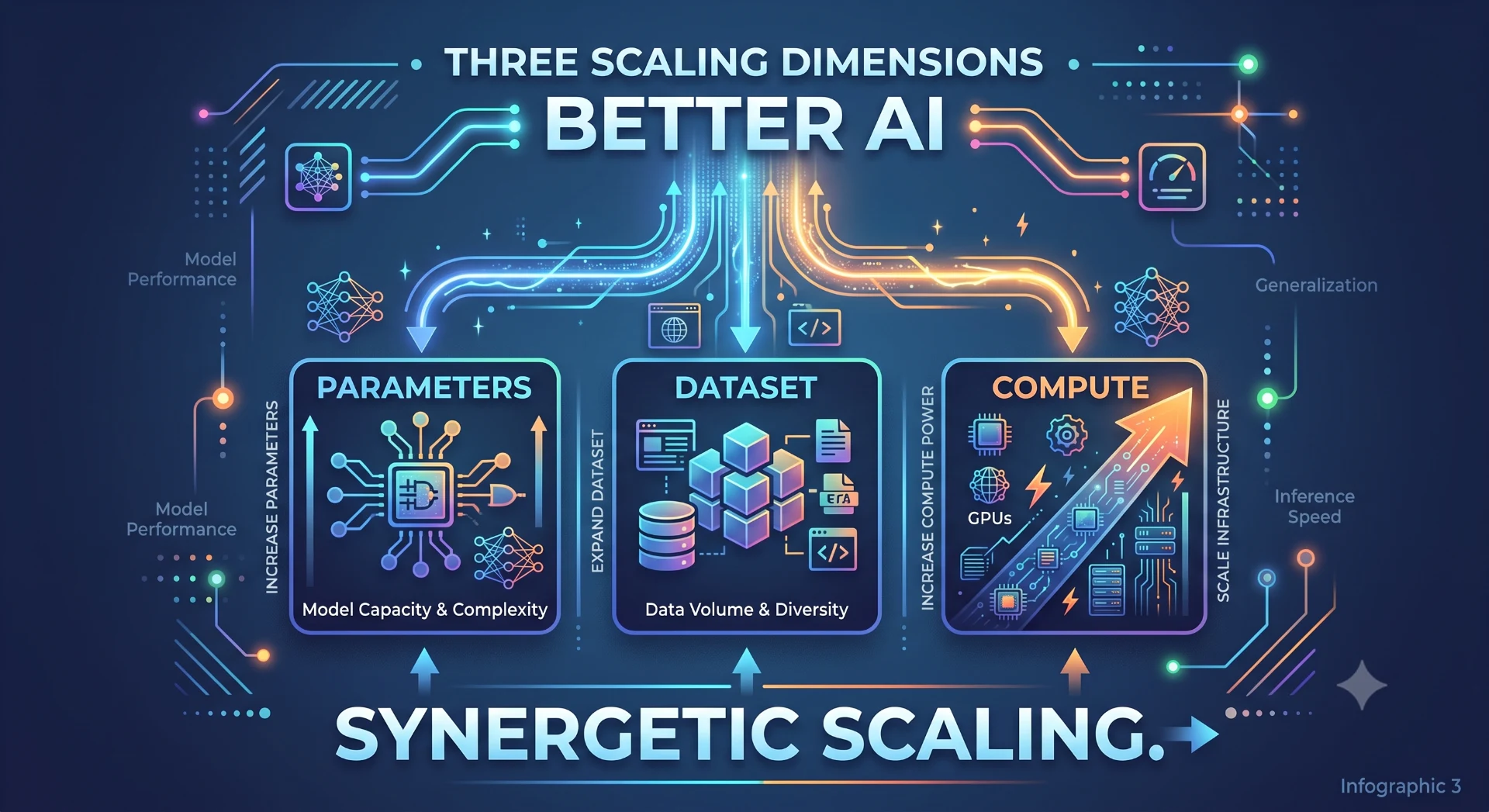
The Three Pillars of Scaling
1. Parameters
Explain neural connections.
Illustration.
2. Data
Why trillions of tokens matter.
3. Compute
GPU clusters
Training time
Electricity
Cost
GPT-3 Changed Everything
GPT-2

↓

GPT-3

↓

175 Billion Parameters

↓

Unexpected Capabilities
Explain emergence.
Chinchilla Changed the Rules
Researchers originally believed:
Bigger models always win.
DeepMind proved:
Smaller models trained on more data perform even better.
This changed training recipes across the industry.
Test-Time Scaling
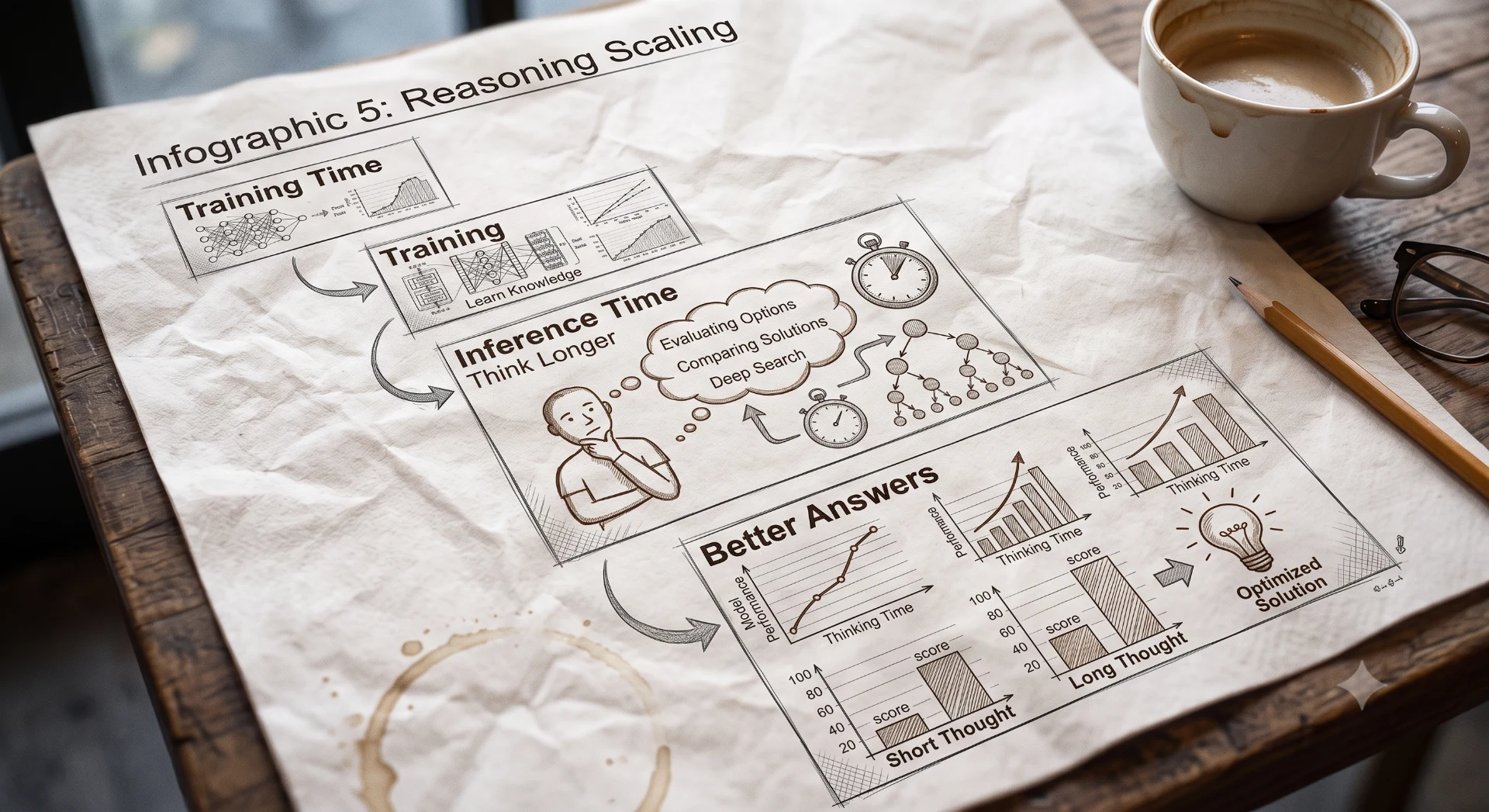
One of the biggest shifts in modern AI is test-time compute.
Instead of making models only larger during training, newer reasoning models spend additional computation while answering questions.
This allows the AI to:
- Break problems into steps
- Evaluate multiple solutions
- Detect mistakes
- Revise intermediate reasoning
- Produce significantly more reliable answers
This is why models like o1 and o3 often improve simply by "thinking longer."
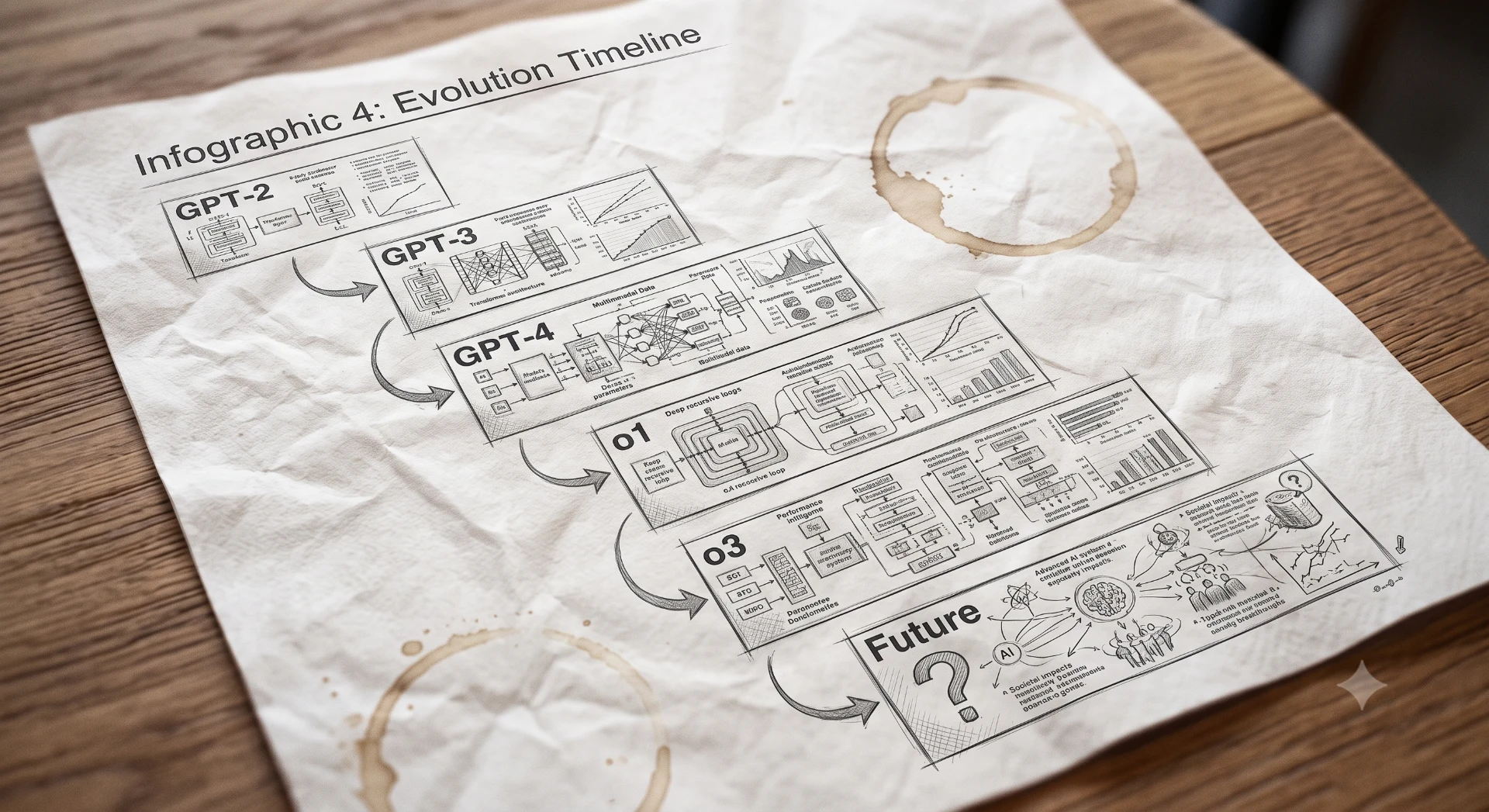
GPT-3 → GPT-4 → o1 → o3
Timeline.
Explain evolution.
Why Scaling Eventually Slows Down
Introduce diminishing returns.
Need:
- More GPUs
- More electricity
- Better data
- Better algorithms
Future of Scaling
Future models may combine:
- Scaling laws
- Synthetic data
- Agentic workflows
- Reinforcement learning
- Test-time reasoning
- Mixture of Experts (MoE)
- Memory systems
Instead of relying on one giant model, AI systems will increasingly coordinate multiple specialized components while continuing to benefit from predictable scaling behavior.
Key Takeaways
✅ Scaling laws predict AI performance before training.
✅ Intelligence improves with more compute, data, and parameters.
✅ Chinchilla showed that data quality matters as much as model size.
✅ Modern reasoning models extend scaling into inference by using additional computation during problem solving.
✅ The next generation of AI will combine scaling laws with reasoning, memory, agents, and more efficient architectures.