Evaluating GPT-Rosalind's Performance in Life Sciences Research
AI-assisted, human-edited
This article was drafted with the help of large language models and reviewed by a Shine Soft Corp engineer before publication. Facts, citations, and code samples were verified against the linked sources. All opinions and editorial direction belong to the editor.
GPT-Rosalind's new capabilities bring greater intelligence to life sciences research, but its performance is not without its challenges and limitations.

Evaluating GPT-Rosalind's Performance in Life Sciences Research
In the life sciences industry, progress depends on synthesizing data and evidence across scales and modalities: molecules, genes, pathways, and living systems. The ability to evaluate and improve the performance of AI models in this domain is crucial for advancing research and development. GPT-Rosalind, a model update to the GPT-Rosalind series, has been introduced with improved performance in core drug-discovery domains such as medicinal chemistry and genomics. This blog post will evaluate GPT-Rosalind's performance in life sciences research, focusing on its strengths and weaknesses, and provide insights into its potential applications and limitations.
🧭 Context and Background
GPT-Rosalind is a model designed to support life sciences research at enterprise scale. It combines GPT-5.5's agentic coding and tool-use capabilities with stronger model intelligence in core drug-discovery domains. The model has been evaluated on a range of tasks, including biology expert queries, complex medicinal chemistry queries, quantitative biology, and wet lab troubleshooting.
⚙️ Architecture and How it Works
GPT-Rosalind's architecture is based on a transformer model, which is a type of neural network designed for natural language processing tasks. The model is trained on a large corpus of text data, including scientific papers, books, and websites. This training data allows the model to learn patterns and relationships in language and generate human-like text.
🛠️ Real-World Implementation
GPT-Rosalind has been implemented in a range of real-world applications, including:
- LifeSciBench: A benchmark designed to evaluate the performance of AI models in life sciences research. The benchmark includes a range of tasks, including evidence handling, analysis, design and optimization, scientific reasoning, validation and operations, and translation and communication.
- Candidate Response: A tool that allows users to input a research question or problem and receive a response from GPT-Rosalind. The response is generated based on the model's understanding of the input and its knowledge of the relevant scientific literature.
📝 Risks and Trade-Offs
While GPT-Rosalind has shown promise in life sciences research, there are also risks and trade-offs associated with its use. These include:
- Bias and error: GPT-Rosalind, like all AI models, is not perfect and can make mistakes. These mistakes can be due to a range of factors, including bias in the training data, errors in the model's architecture, or limitations in the model's knowledge.
- Over-reliance on AI: The use of GPT-Rosalind and other AI models can lead to over-reliance on technology and a lack of critical thinking and problem-solving skills.
- Intellectual property and ownership: The use of GPT-Rosalind and other AI models raises questions about intellectual property and ownership. Who owns the output of an AI model, and what rights do users have to use and distribute that output?
📝 Key Takeaways
- GPT-Rosalind is a powerful tool for life sciences research, with applications in a range of areas, including biology expert queries, complex medicinal chemistry queries, quantitative biology, and wet lab troubleshooting.
- The model has been evaluated on a range of tasks, including evidence handling, analysis, design and optimization, scientific reasoning, validation and operations, and translation and communication.
- While GPT-Rosalind has shown promise, there are also risks and trade-offs associated with its use, including bias and error, over-reliance on AI, and intellectual property and ownership issues.
- Further research is needed to fully understand the potential of GPT-Rosalind and other AI models in life sciences research.
📸 Source images
Reference figures from the source article.
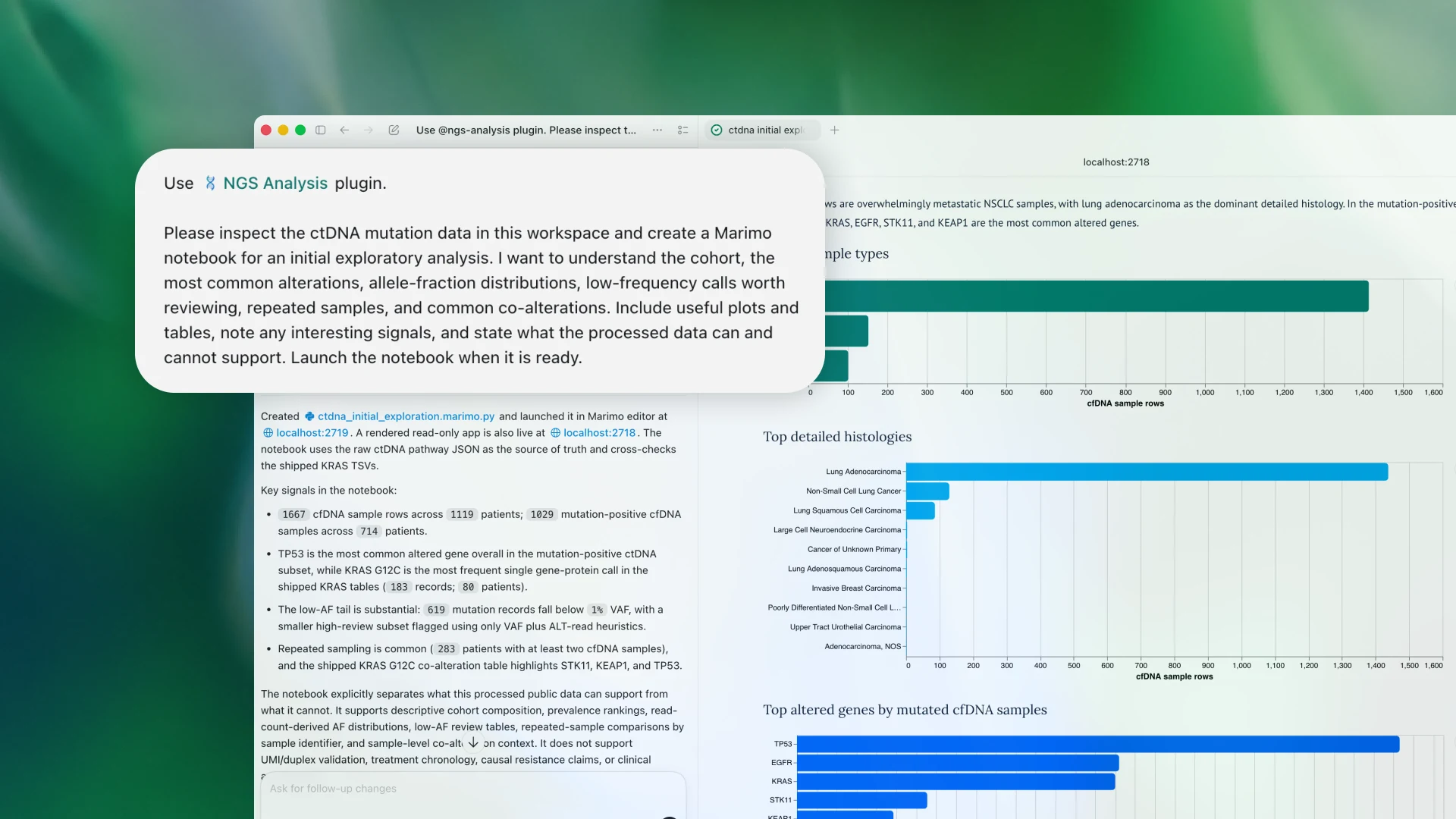 Life Sciences NGS Analysis plugin
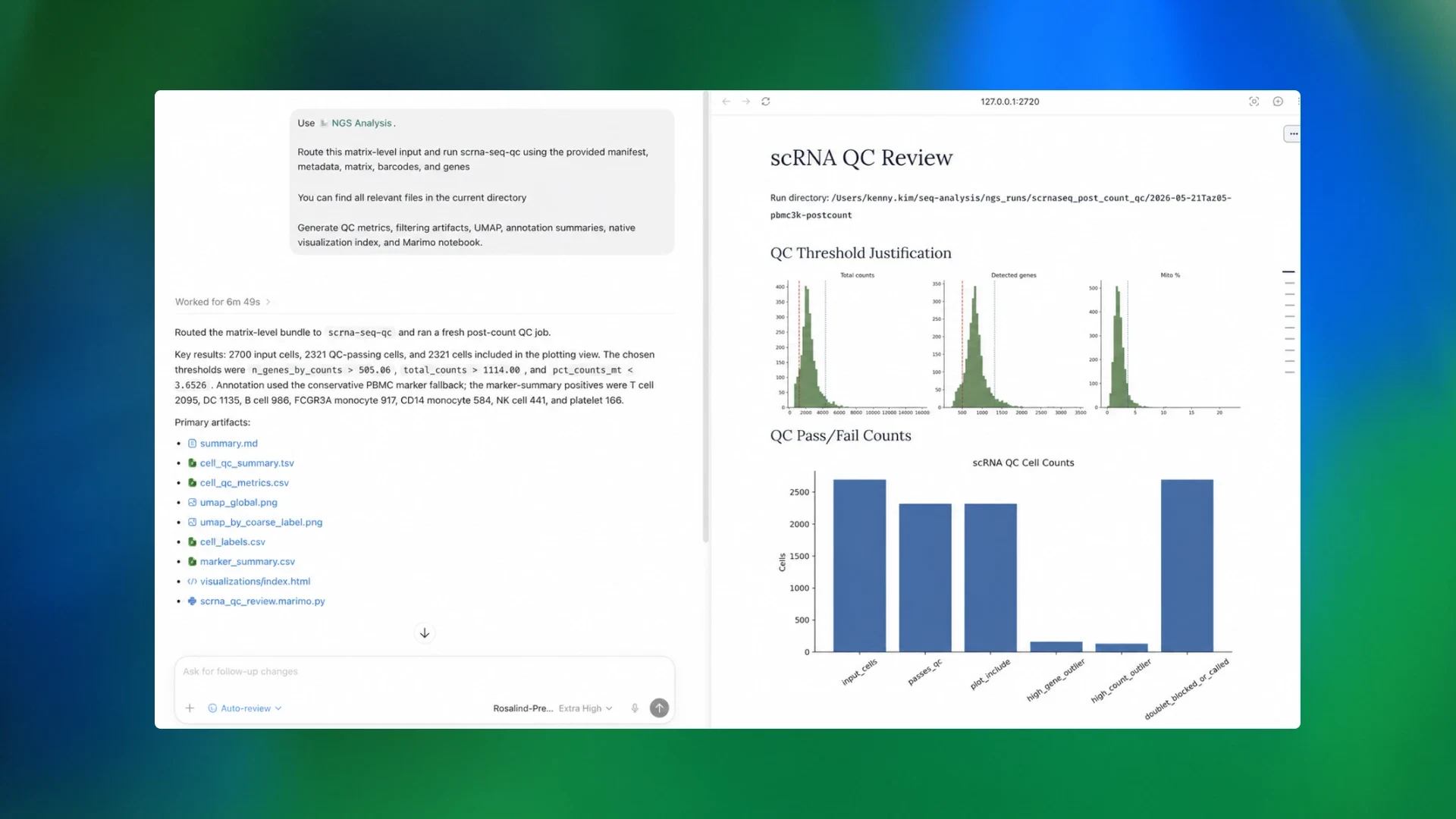 Turn a 10x-style matrix bundle into QC-filtered single-cell artifacts, annotations, and UMAPs you can inspect and revise in Codex. The Life Sciences NGS Analysis plugin routes the request to scrna-seq-qc, chooses QC thresholds from the data, preserves provenance around filtering and annotation, and surfaces blockers such as missing doublet-detection dependencies.
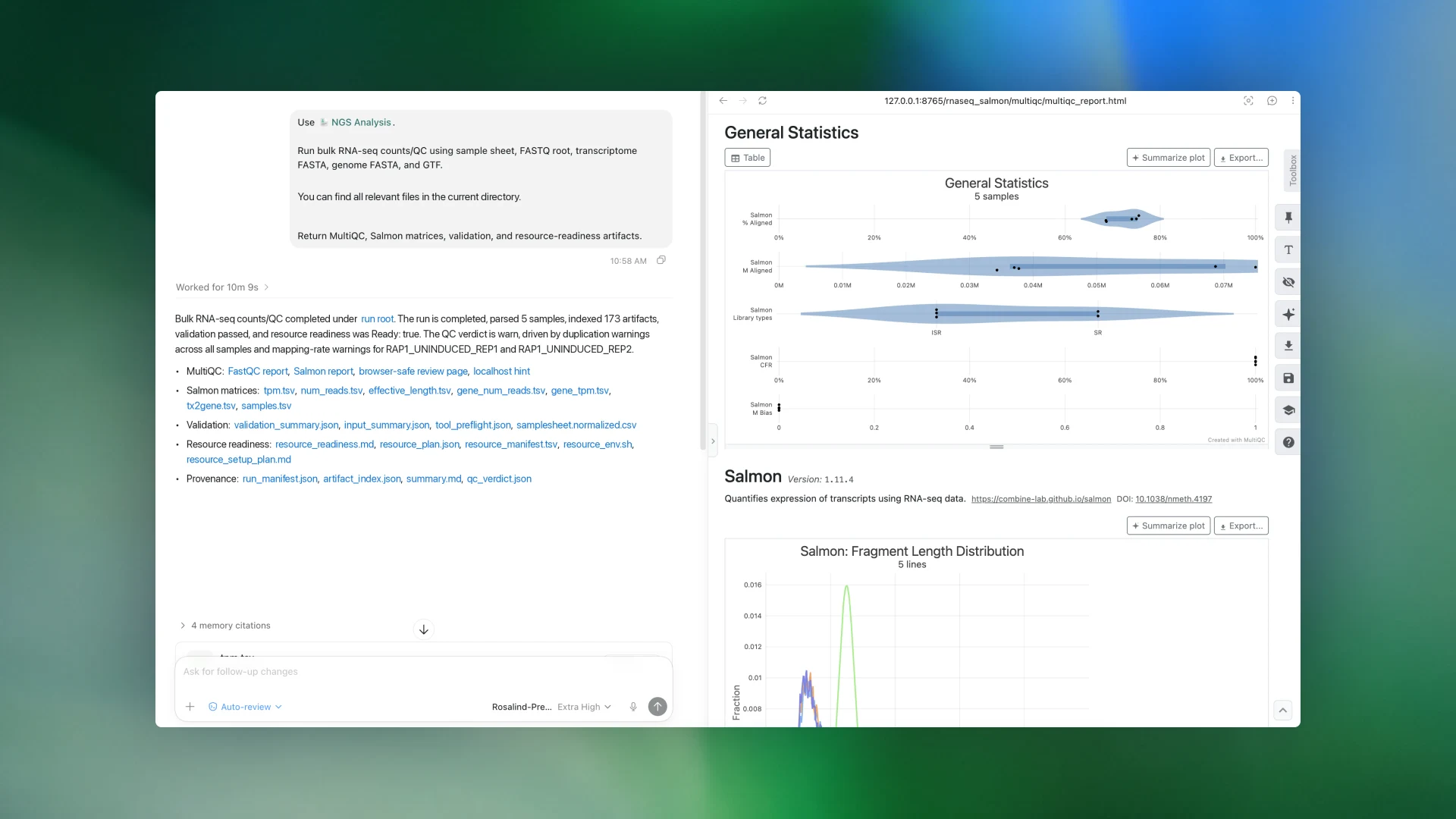 Turn a bulk RNA-seq sample sheet, FASTQ bundle, and reference files into a QC-reviewed counts bundle you can inspect and reuse in Codex. The Life Sciences NGS Analysis plugin routes the request, validates the inputs, and returns an auditable run envelope with MultiQC, Salmon matrices, provenance, and explicit caveats.
References
This article was informed by reporting and engineering write-ups from the sources below. Please visit them for the original analysis:
- Evaluating GPT-Rosalind's Performance in Life Sciences Research — openai
- Import AI 460: Reward hacking society, RSI data from Anthropic; and RL-based quadcopter racing — import-ai
- Washington wants a piece of OpenAI — the-rundown
- How Endava is redesigning software delivery around AI agents — openai
Shine Soft Corp synthesizes and commentates on these sources; we do not republish their content.