Build highly scalable serverless LangGraph multi-agent systems in AWS with Amazon Bedrock AgentCore
AI-assisted, human-edited
This article was drafted with the help of large language models and reviewed by a Shine Soft Corp engineer before publication. Facts, citations, and code samples were verified against the linked sources. All opinions and editorial direction belong to the editor.
Practical guidance on Build highly scalable serverless LangGraph multi-agent systems in AWS with Amazon Bedrock AgentCore.
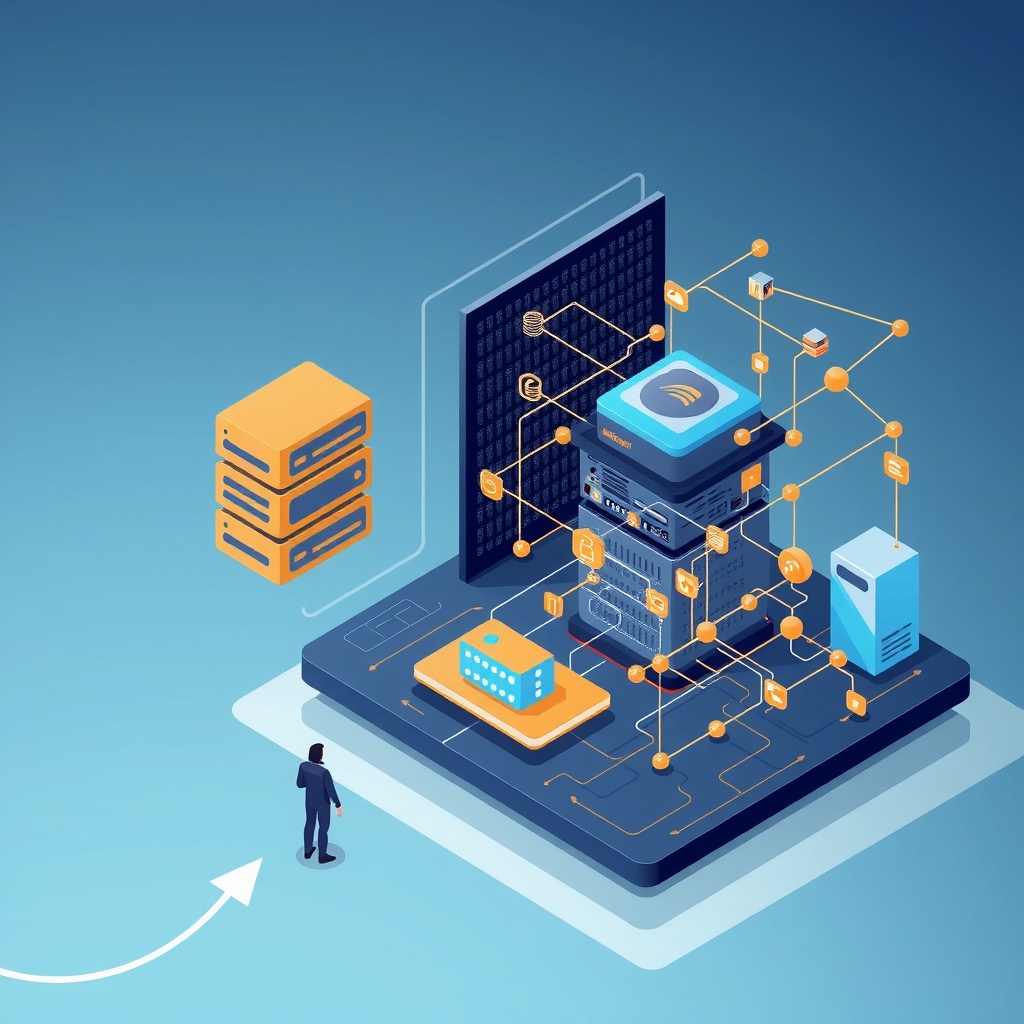
Build highly scalable serverless LangGraph multi-agent systems in AWS with Amazon Bedrock AgentCore
As organizations increasingly adopt generative AI in production environments, they face significant challenges related to inference latency, scalability, state management, and operational visibility. Building high-performance AI agents requires more than powerful models; it demands an implementation that can deliver consistent performance, preserve context across interactions, and provide deep observability into agent behavior. In 2026, the ability to build highly scalable, serverless multi-agent systems will be crucial for organizations to operate reliably and efficiently. This article provides a solution to build highly scalable, serverless LangGraph multi-agent systems on AWS using Amazon Bedrock AgentCore.
🧭 Context and Background
The evolution of generative AI from experimental prototypes to production-ready systems has been rapid. However, as organizations move beyond demos and proofs of concept, they encounter challenges related to inference latency, scalability, state management, and operational visibility. To address these challenges, organizations need to adopt a solution that can deliver consistent performance, preserve context across interactions, and provide deep observability into agent behavior. Amazon Bedrock AgentCore provides a solution to build highly scalable, serverless multi-agent systems on AWS.
⚙️ Architecture and How it Works
The solution combines serverless technologies such as AWS Lambda and AWS Step Functions to build LangGraph agents that scale automatically, respond to events in real time, and remove infrastructure management. LangGraph's explicit graph-based execution model enables deterministic coordination, parallelism, and conditional routing between agents, making complex multi-agent workflows more straightforward to reason and debug. The solution also uses AgentCore Observability to provide detailed visibility into each invocation, capturing model inputs/outputs, latency, and tool-chain metrics across distributed serverless components. AgentCore Memory enables agents to maintain short-term conversational context and long-term knowledge across sessions.
🛠️ Real-World Implementation
A real-world implementation of the solution is a generative AI-powered multi-agent campaign review system that orchestrates human reviews using diverse personas. The system consists of three specialized AI agents that analyze the marketing campaign in parallel – a persona reviewer agent reviews content from diverse demographic perspectives and provides resonance scoring, a validator agent verifies legal alignment and brand guideline adherence, while a finalizer agent synthesizes feedback into actionable recommendations. The system uses LangGraph to implement the orchestrator and specialized agents by modeling the system as a stateful execution graph. The LangGraph orchestrator and specialized agents are together packaged as a Docker container and deployed on AWS Lambda.
📝 Risks and Trade-Offs
Building highly scalable, serverless multi-agent systems on AWS using Amazon Bedrock AgentCore requires careful consideration of several risks and trade-offs. One of the key risks is the complexity of the system, which can make it challenging to debug and maintain. Another risk is the potential for inference latency and scalability issues if the system is not properly optimized. Additionally, the use of serverless technologies can introduce new security risks if not properly managed. To mitigate these risks, organizations should carefully evaluate their requirements and design a system that meets their specific needs.
✅ Forward-Looking Takeaway
The ability to build highly scalable, serverless multi-agent systems on AWS using Amazon Bedrock AgentCore will be crucial for organizations to operate reliably and efficiently in 2026. As generative AI continues to evolve, organizations will need to adopt solutions that can deliver consistent performance, preserve context across interactions, and provide deep observability into agent behavior. By using LangGraph and AgentCore, organizations can build complex multi-agent workflows that are more straightforward to reason and debug, and provide detailed visibility into each invocation.
📝 Key takeaways
- Building highly scalable, serverless multi-agent systems on AWS using Amazon Bedrock AgentCore requires careful consideration of several risks and trade-offs.
- LangGraph provides a solution to build complex multi-agent workflows that are more straightforward to reason and debug.
- AgentCore Observability provides detailed visibility into each invocation, capturing model inputs/outputs, latency, and tool-chain metrics across distributed serverless components.
- AgentCore Memory enables agents to maintain short-term conversational context and long-term knowledge across sessions.
- The ability to build highly scalable, serverless multi-agent systems will be crucial for organizations to operate reliably and efficiently in 2026.
References
This article was informed by reporting and engineering write-ups from the sources below. Please visit them for the original analysis:
- Build highly scalable serverless LangGraph multi-agent systems in AWS with Amazon Bedrock AgentCore — aws-ml
- Import AI 458: Reckoning with the future; and a singularity story — import-ai
- Technical deep dive: AgentCore payments and innovation in agentic commerce — aws-ml
- Build high-performance generative AI systems with Strands Agents, NVIDIA NIM, and Amazon Bedrock AgentCore — aws-ml
Shine Soft Corp synthesizes and commentates on these sources; we do not republish their content.